

12 Lanes Wet Wipes Machine for High Efficiency Production
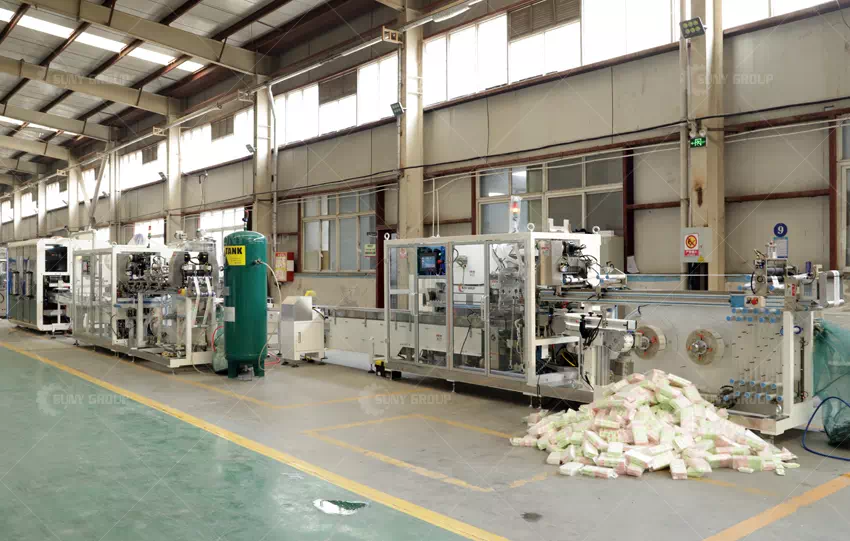
Against the backdrop of the wet wipe industry’s ongoing transition towards higher efficiency, lower costs, and consistent quality, the 12-stage dual-roll wet wipe machine developed by Suny Wipes has undergone targeted optimisation across the entire production process—from feeding and folding to packaging and lid application. Its core value lies in reducing the complexity of manual operations and enhancing continuous production capacity. Through technical measures such as tension control, automatic material splicing, and vision recognition, it ensures consistent product quality, providing more reliable equipment support for large-scale production.
Folding Machine: Structural Optimisation for Stability and Continuous Production
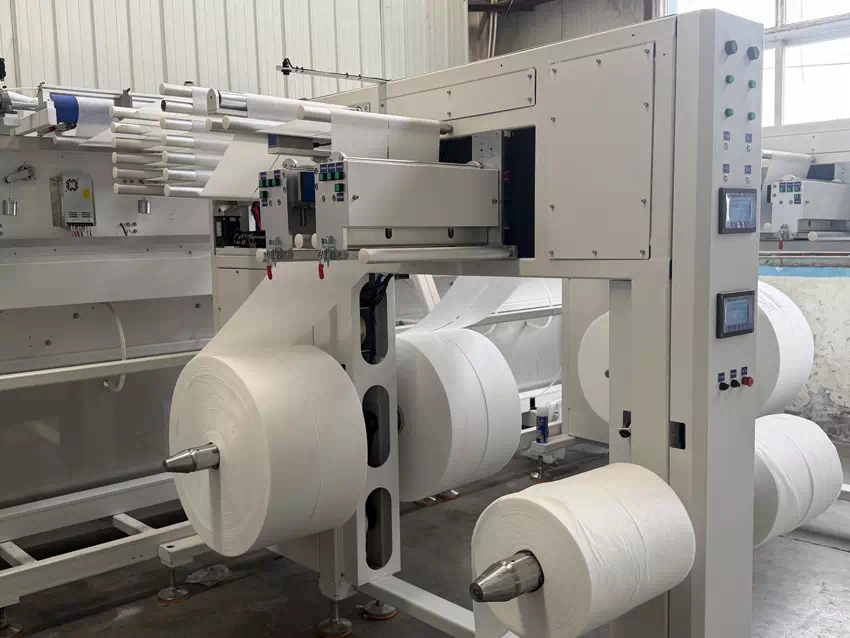
The core of the improvements to the folding machine section lies not simply in increasing speed, but in resolving the issue of coordination between ‘man’ and ‘machine’. By lowering the height of the fabric rolls on the feed rack, the feeding action has become significantly easier, reducing physical strain on operators whilst also lowering the rate of operational errors. The automatic fabric splicing area utilises a slide rail and open structure, creating a smoother operating space that enhances splicing efficiency while reducing downtime.
At the operational level, servo-driven winding and unwinding, coupled with constant tension control, enable fabric splicing to be performed without stopping the machine, even at high speeds, thereby minimizing frequent interruptions. The visualisation of tension parameters makes adjustments more intuitive, reducing reliance on experience-based judgement.
Furthermore, the equipment is compatible with in-line slitting and accommodates both single-roll and dual-small-roll configurations. Automatic web guiding and a counterweight system ensure stable fabric conveyance, preventing folding misalignment and fabric drop-off issues. The pre-wetting and layer-by-layer wetting designs directly improve moisture uniformity, particularly for non-woven fabrics with poor water absorption. The flying shear system supports free adjustment between 110–260 mm, allowing length adjustments to be made without disassembling the blades, thereby improving changeover efficiency whilst ensuring clean cuts and keeping noise levels within reasonable limits.
Packaging Machine: A Key Stage for Reducing Downtime and Material Waste
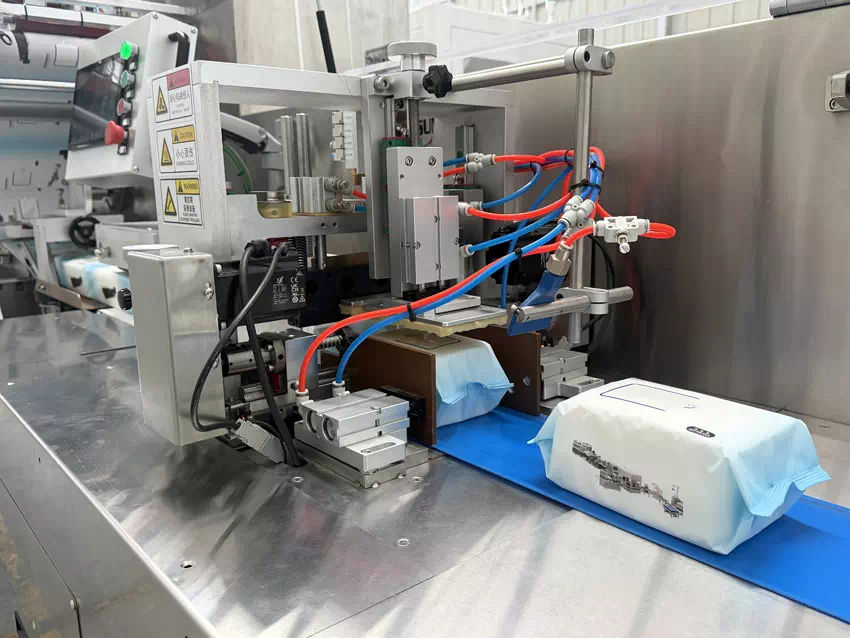
The focus of optimisation in the packaging stage lies in ‘uninterrupted production’. By incorporating a buffer mechanism, the equipment can continue to operate continuously without stopping or reducing speed, a factor that directly impacts overall production capacity.
The automatic film splicing system, combined with servo constant tension control, achieves precise edge-to-edge alignment, resulting in minimal waste during the splicing process and significantly reducing material wastage. The independent operation of the top and bottom sealing units ensures a more stable sealing position, preventing inconsistencies in appearance caused by mechanical errors.
At the operational level, the insertion depth and timing are set directly via electric adjustment on the interface, reducing the time required for manual intervention. The overall cage-type structure ensures higher operational stability, whilst vibration and failure rates are kept under control. Additionally, external lubrication ports simplify daily maintenance, thereby reducing long-term operating costs.
Cap Sealing Machine: A Combination of Automation and Precision
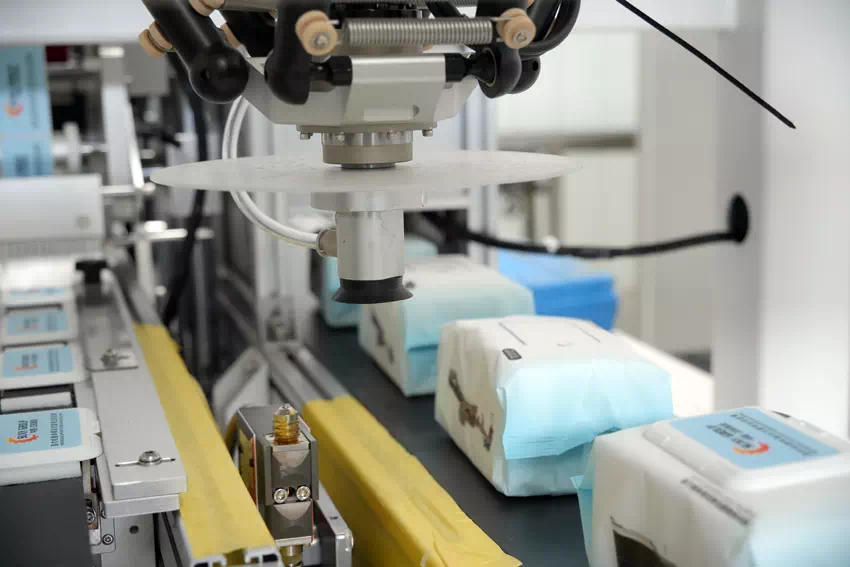
The value of the cap sealing process lies in reducing manual labour and ensuring consistency. The equipment utilises a multi-hopper and dual-labelling structure to enable automatic switching between caps and labels, thereby avoiding downtime caused by material changes. The application of a four-axis parallel manipulator makes the cap sealing action faster and more stable, making it suitable for continuous production rhythms.
A vision recognition system is used to position labels, resolving the issue of label misalignment found in traditional equipment and ensuring product appearance quality from the outset. The adhesive spray trajectory can be quickly adjusted via the operating interface without the need for complex debugging procedures, whilst also controlling adhesive overflow to ensure a neater finished product. The simplified overall structure has also reduced maintenance complexity.
CONTACT US
If you have any requirement or suggestion, please fill in the form and send to us, thanks! Email:sunymachine@gmail.com Whatsapp:+8613674945231